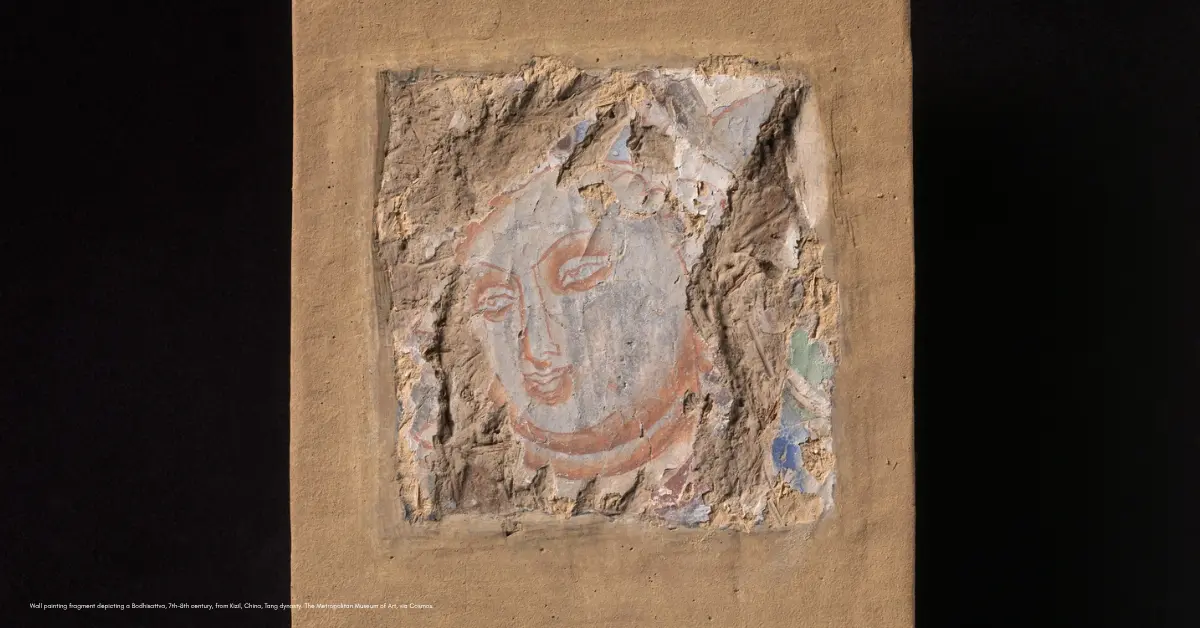
Two paintings arrive at auction in similar condition. One has been "restored," its colors bright, its surface smooth, small losses invisibly filled. The other has been "conserved," stabilized against further damage but visibly showing its age, a few old losses left honestly as they are. The restored painting often looks better in a photograph. The conserved one often sells for more.
This isn't a contradiction. It reflects a distinction that matters enormously in how collectors, auction houses, and institutions actually value an object, and one that's frequently blurred in casual conversation despite meaning something quite different in practice.
Conservation aims to stabilize an object and slow further deterioration while altering it as little as possible. A conservator working on a damaged painting might consolidate flaking paint, remove a layer of degraded varnish, or repair a tear in the canvas, always documenting exactly what was done and, ideally, using methods that could be reversed by a future conservator if better techniques emerge. The guiding principle is minimal intervention: do what's necessary to stop the damage, and no more.
Restoration aims at something different: returning an object closer to how it originally looked, or how it's imagined to have looked. A restorer might repaint a damaged section entirely, replace a missing element, or significantly alter a surface's appearance to achieve visual completeness. The goal is a satisfying result to look at, which is a legitimate goal in plenty of contexts, but a fundamentally different one from conservation's goal of stability and minimal alteration.
Heavy restoration creates a specific problem for anyone trying to assess an object's authenticity and value: it makes the object harder to read. A restorer's repainting sits on top of the original material, obscuring what's actually there. Years later, even the restorer's own work can become difficult to distinguish from what the original artist made, particularly if documentation is lost or was never thorough to begin with.
This matters enormously for authentication. A conservator's minimal, reversible, well-documented intervention leaves the underlying object legible: a future expert, or a future conservator with better technology, can still examine the original material and understand exactly what's authentic and what's been added. Heavy restoration can permanently compromise that legibility, sometimes making it impossible to fully separate original from replacement material even with sophisticated analysis.
Serious buyers and institutions have grown increasingly sophisticated about this distinction, and it shows in pricing. An object with a well-documented conservation history, however visibly aged, is often viewed as a more honest and more valuable proposition than one with extensive, undocumented restoration, even when the restored version looks more complete to an untrained eye.
The real issue is rarely restoration itself; it's undocumented restoration. A restoration performed decades ago, before current standards existed, without records of what was done or with what materials, leaves any future buyer or conservator working blind. They can't know how much of what they're looking at is original, what materials were used, or whether the restoration itself might be causing new problems over time as materials age differently than the surrounding original.
This is precisely where a collector's due diligence, or an advisor's, becomes essential rather than optional. Asking directly whether a piece has been restored, requesting any existing documentation, and if none exists, commissioning a condition assessment before purchase, can be the difference between an object whose history is legible and one that will remain permanently ambiguous.
None of this makes restoration inherently wrong. Some objects, particularly those intended for functional use, like historic instruments, furniture, or mechanical objects such as classic cars, often need restoration to remain usable at all, and buyers in these categories frequently expect and value skilled restoration work. A violin that's never played, however historically pristine, isn't fulfilling its original purpose the way a well-restored one that a musician can actually perform on does.
The key differences that separate defensible restoration from value-destroying restoration are the same regardless of category: documentation of exactly what was done, use of appropriate and ideally reversible materials and methods, and honesty with any future buyer about the extent and nature of the work. Undisclosed restoration is the actual problem, not restoration itself.
Before acquiring anything with meaningful value, particularly anything old enough that some intervention over its lifetime is likely, it's worth asking specifically about conservation and restoration history rather than assuming a clean bill of health from appearance alone. A seller's silence on the topic isn't necessarily reassuring; it's just as often a sign nobody has asked, or that the answer wouldn't help the sale.
For collectors building a collection with any long-term ambition, whether personal, or eventually institutional, favoring well-documented conservation over undocumented cosmetic restoration tends to protect both the object's integrity and its value over time, even when the immediate visual difference favors the version that's had more done to it.
About Orpheus
Orpheus Alerts helps collectors discover specific, rare, and hard-to-find objects, and understanding an object's conservation history is part of the due diligence that makes a discovery worth pursuing. Orpheus Alerts — When you know what you want.
