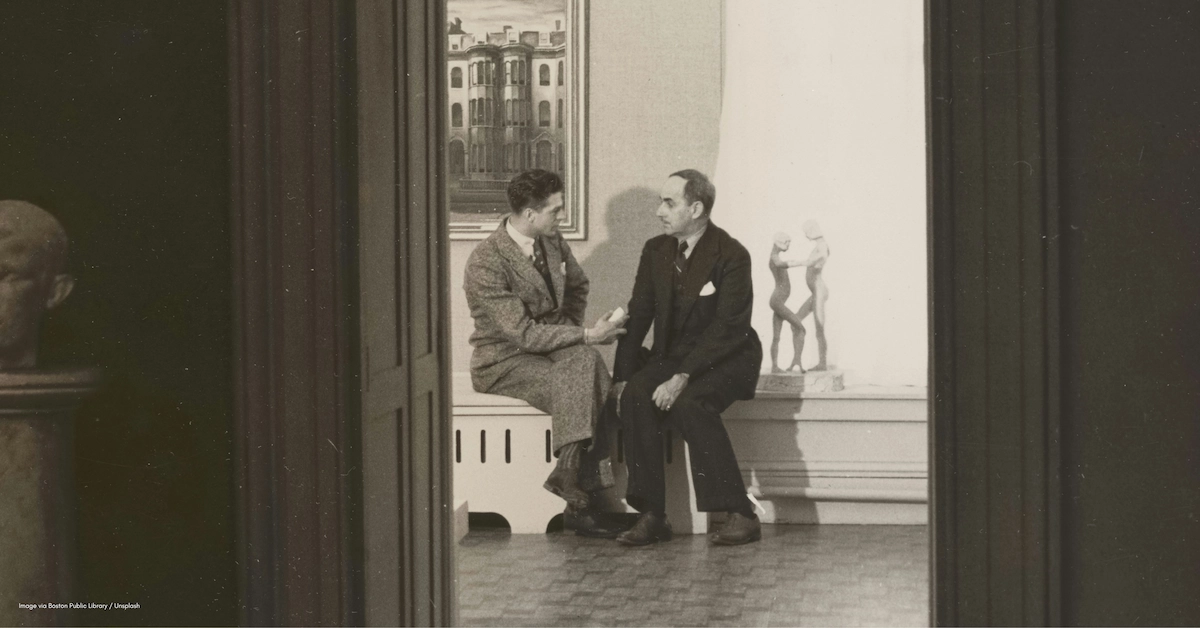
Nobody asks to see the receipts on the first date. They should. Buying art without checking its provenance is exactly that: falling for the painting before you've bothered to find out who it's been sleeping with for the last eighty years.
Provenance is the ownership history of a work of art. Who has owned it, when, and how it moved from one hand to the next. It sounds bureaucratic. It is anything but. Provenance is the difference between buying a masterpiece and buying a lawsuit.
First-time buyers tend to treat provenance as a formality, something a gallery hands over after the money has already changed hands. Seasoned collectors treat it as the actual object of negotiation. The painting is what you hang on the wall. The provenance is what makes it yours to hang.
A work of art with no history is not automatically fake, stolen, or looted. But it is automatically a question mark, and question marks are expensive.
Museums, auction houses, and serious private collectors have spent the last three decades getting far more disciplined about where art comes from, largely because the alternative kept blowing up in public. Works have been seized from museum walls decades after purchase. Estates have been dragged into court over paintings their families believed they legitimately owned. Insurance policies have been voided. None of this happened because the buyers were careless people. It happened because provenance research felt optional, right up until it wasn't.
Treat provenance the way a collector treats condition. You wouldn't buy a painting without asking about restoration. Don't buy one without asking where it's been.
A dealer telling you a painting has "excellent provenance" is a sales pitch, not a fact. Verification means documents, not adjectives. Here is what should exist, and what you should ask to see before you commit:
A continuous chain of ownership. Ideally from the artist's studio to the present day, with no unexplained decades-long gaps. Gaps aren't automatically disqualifying (plenty of legitimate works spent years in private hands with limited paper trail), but a gap should be acknowledged, not glossed over.
Bills of sale, auction records, or estate documents. Actual paper, not verbal assurance. A previous auction listing is a good sign. A gallery invoice from a known dealer is a good sign. "The family always said" is not a sign of anything.
Exhibition history. If a work has been shown publicly in a museum, a major gallery, a documented retrospective, that history is verifiable and it is gold. Exhibition catalogues, loan agreements, and museum records create a public paper trail that is very difficult to fabricate.
Publication history. Has the work appeared in a catalogue raisonné, a scholarly monograph, or an artist's official archive? A catalogue raisonné entry, where one exists for the artist, is close to the gold standard. It means an acknowledged expert has examined the work and accepted it into the canon.
A clean title search for the 1933–1945 period, where relevant. For European works, this window matters enormously. Restitution claims tied to Nazi-era looting continue to surface decades later, and a legitimate seller will not flinch at this question. If they do, that flinch is the most important piece of information you'll get all day.
There is a version of this conversation that feels awkward to have with someone who has been nothing but charming to you. Have it anyway.
Ask where the work has been for the last twenty years, not just the last sale. Ask whether it has ever been withdrawn from an auction. A withdrawn lot is not automatically a red flag, but the reason for withdrawal matters, and a reputable seller will tell you. Ask whether the work has been examined by a conservator, and whether that report is available. Ask, plainly, whether there is any known dispute over ownership.
A dealer or gallery with nothing to hide will answer these questions without friction, sometimes even proactively, because it makes the eventual sale smoother. Reluctance is data, and so is over-explanation: a five-minute story where a one-line answer would do is worth noticing.
It's worth separating two things that get bundled together in casual conversation: whether a work is by the artist it's attributed to, and whether the ownership history is legitimate. A work can have flawless authentication and murky provenance, or the reverse.
Authentication typically comes from connoisseurship (expert visual and stylistic analysis), technical examination (materials, pigments, canvas, dating methods), and inclusion in a catalogue raisonné or recognized archive. For living or recently deceased artists, the artist's foundation or estate is often the relevant authority. For older works, expect a combination of scholarly opinion and forensic analysis.
Neither authentication nor provenance alone is sufficient. You want both, and you want them documented separately, because a forger who successfully fakes a signature has not automatically faked an ownership history, and vice versa.
For anything above a modest price point, provenance research is a discipline, not a phone call. It typically draws on several overlapping sources: auction house archives (many of the majors maintain searchable sale records going back decades), artist foundation and estate records, museum loan and exhibition files, dealer archives where they survive, and specialized databases tracking stolen and looted art, with the Art Loss Register being the most widely used.
For higher-value works, buyers increasingly commission independent provenance researchers rather than relying solely on the seller's documentation. This isn't an insult to the seller; it's standard practice at the level where six or seven figures are changing hands, in the same way a buyer commissions a structural survey on a house even when the seller insists the roof is fine. A good researcher will cross-reference the seller's account against independent records rather than simply verifying that the paperwork is internally consistent, because internally consistent paperwork is exactly what a convincing fabrication looks like.
Auction houses do a version of this work themselves before consigning anything of significance, which is part of why buying at a reputable auction house carries a different risk profile than buying through an unfamiliar private seller. It is not a guarantee — auction houses have been fooled too — but it is a second set of eyes with financial incentive to get it right.
The two most common purchase paths carry different provenance dynamics, and it's worth understanding both before you pick a lane.
At auction, provenance is usually printed directly in the catalogue entry, often summarized as a clean list of prior owners and exhibitions. This is convenient, but a catalogue summary is a marketing document as much as a research document. It's written to sell the lot. Ask the specialist department for the underlying documentation behind any claim in the entry, particularly for anything described vaguely, like "private collection" with no further detail across multiple decades.
Through a private dealer, provenance often depends far more on the individual dealer's reputation and record-keeping. Established galleries with decades of history and institutional relationships tend to have the strongest paper trails, precisely because their business depends on repeat trust from serious collectors and museums. A newer or unfamiliar dealer isn't automatically less trustworthy, but the burden of independent verification falls more heavily on you.
Private sales between individuals — no gallery, no auction house, just two people and a painting — carry the least institutional oversight and the highest need for your own diligence. This is where a specialist provenance researcher earns their fee many times over.
Some patterns are common enough to name directly:
None of these facts alone means walk away. All of them together usually do.
Provenance research isn't a box to check before wiring funds. It's an ongoing part of stewardship. Keep the documentation you receive, add to it if you commission further research, and pass it along intact if you ever sell. A collector who maintains and extends a work's provenance record is doing the next owner, and the work itself, a genuine service.
This is, in the end, what separates buying art from buying furniture. A chair doesn't need a biography. A painting does, and a serious collector treats writing the next chapter of that biography as part of the privilege of ownership.
About Orpheus
At Orpheus, we believe that discovering exceptional works of art should not depend solely on chance, auction catalogues, or conventional search engines. Our mission is to help collectors, museums, galleries, advisors, and researchers surface significant opportunities as early as possible, by monitoring an extensive network of public sources worldwide. Provenance research works the same way market discovery does. The collectors who do best are the ones who know where, and when, to look.
