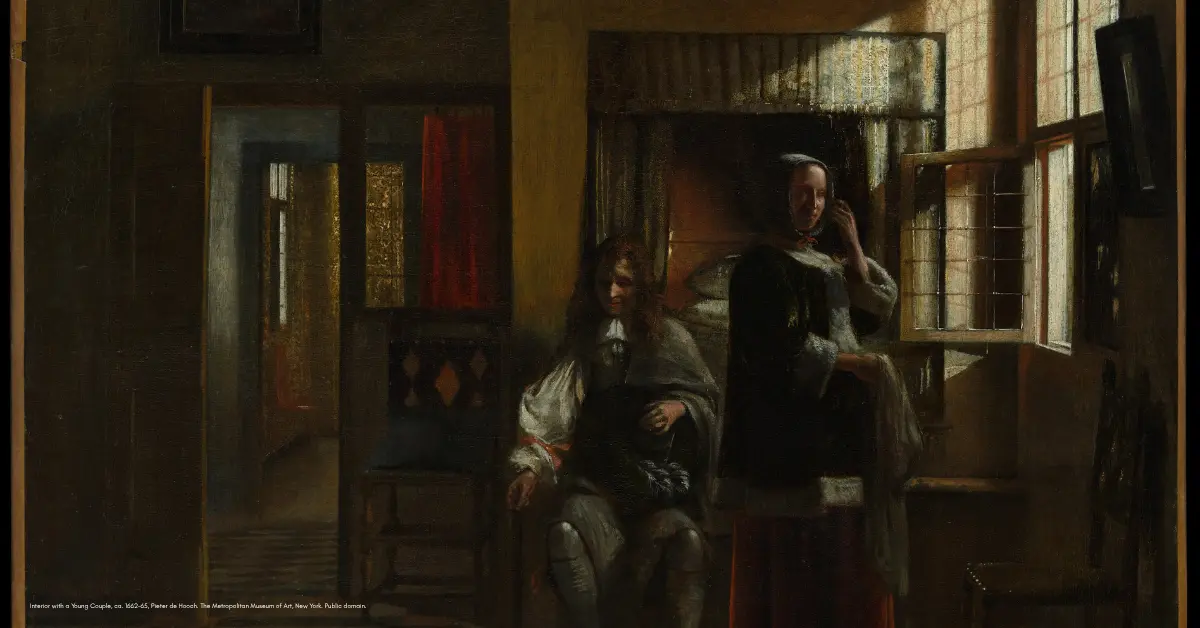
In 2014, a work described in its sale catalogue as "attributed to the circle of" a minor seventeenth-century Dutch painter sold at a regional auction for a few thousand euros. The buyer was a Paris dealer who had examined the piece in person and identified a number of details that the catalogue description had not addressed. Within two years, the painting had been confirmed as an original by a significant artist and sold at a major London house for a figure in the millions.
The dealer had not acted on intuition. They had read a set of visual and physical clues that pointed toward a discrepancy between what the catalogue said and what the object was. Those clues are learnable. They do not require decades of specialist training to recognise in outline, though acting on them with confidence requires exactly that. But an owner who knows what questions to ask, and what details in a painting might prompt those questions, is in a different position from one who simply accepts the attribution that came with the work when it was acquired.
What follows is a guide to ten of those clues: the details that, when present, suggest that a painting may warrant closer examination than it has received. This is not a guide to making attributions. It is a guide to recognising when an attribution deserves to be questioned, and to understanding what the subsequent process of professional examination involves.
The material on which a painting was made is one of the first things to examine. Canvas became the dominant support for European painting from the sixteenth century onward, but panel (typically oak in Northern Europe, poplar in Italy) was the preferred support for the most significant works before that shift, and continued to be used for smaller, high-quality commissions well into the seventeenth century. Copper was used for cabinet paintings of exceptional quality throughout the seventeenth century, particularly in the Netherlands and Flanders.
A painting on panel or copper that has been catalogued as the work of a minor or unknown artist warrants closer examination. Both materials were more expensive and technically demanding than canvas, and their use indicates a commission of some status. The specific characteristics of the panel (species of wood, construction method, presence of maker's marks or stamps from guild inspection) can provide significant dating and geographic information that a specialist can read.
Owners who look only at the front of their paintings are missing a significant part of what the object can tell them. The reverse of a canvas or panel often carries information that the painted surface does not: old auction house stamps, collector's labels, stencilled numbers from historic sales, wax seals, and inscriptions that record previous ownership. These marks are the physical traces of a provenance history that may not have been researched by whoever catalogued the work most recently.
A stamp from a significant nineteenth or early twentieth-century collection, a label from a historic sale at Christie's or Sotheby's, or a stencil from a European royal collection are all indicators that the work was at some point considered significant enough to be in those contexts. That history does not guarantee quality, but it suggests that the work attracted serious attention at some earlier point in its life.
For works on canvas, the stretcher (the wooden frame over which the canvas is stretched) and the lining (a secondary canvas sometimes added during restoration to support a fragile original) carry their own information. An original stretcher that dates to the period of the painting is a strong indicator of authenticity and of a work that has not been heavily intervened upon. A period lining indicates that the canvas was considered significant enough to warrant the expense of conservation at some earlier date.
Modern restretching onto a new stretcher is not necessarily a negative indicator, but the absence of any period construction on the reverse, combined with a very clean and apparently untouched painted surface, may indicate a work that has been heavily cleaned or that is not what its attribution suggests.
The subject of a painting carries implications about who commissioned it and who painted it. Large-scale history paintings (scenes from mythology, scripture, or ancient history) were the highest category in the academic hierarchy and were typically produced by the most accomplished artists working in each period. A work of this type catalogued as the work of an unknown or minor painter has an internal inconsistency that merits attention: either the attribution is wrong, or the work is a copy, or the hierarchy of subjects is being misread.
More specifically, certain subjects are strongly associated with specific artists. A painting of a domestic interior with characteristic light effects, a figure study with specific anatomical conventions, or a landscape with a distinctive treatment of sky and foliage can prompt a specialist to ask whether the attribution reflects a genuine assessment or simply a default category applied to a work that was not closely examined.
In almost all periods and traditions of Western painting, the most demanding passages of a work are the faces and hands of figures. These are where the master painter's hand is most visible, and where workshop assistants were least likely to be given responsibility. A painting in which the landscape or drapery is competent but the faces and hands are exceptional is displaying a hierarchy of quality that does not fit the attribution of a minor or unknown work.
This observation is not a substitute for specialist examination, but it is a reliable first indicator. A face in which the eyes, skin, and expression are rendered with genuine subtlety and economy is the work of a trained and accomplished painter. That observation does not name the painter, but it opens the question of whether the current attribution is accurate.
The dimensions of a painting and the proportions of its composition are not arbitrary. Artists working in established traditions produced work in formats that reflect the conventions of their period, the requirements of their patrons, and their own working methods. A painting whose dimensions closely match the known formats of a specific major artist, or whose compositional structure reflects documented patterns in that artist's work, is providing circumstantial evidence that deserves to be followed.
Format evidence is rarely conclusive on its own, but it is the kind of detail that a specialist examining a work for the first time will note immediately, because it allows them to frame their further examination within a specific comparative context.
Heavy cleaning, overpainting, and restoration can obscure original quality and make it genuinely difficult to assess what lies beneath. But a painting whose surface retains its original glazes (thin, translucent layers applied over the basic paint to create depth and luminosity) is displaying a technical sophistication that is not characteristic of minor or amateur work. Glazes are labour-intensive to apply and require a high level of technical skill; they are also among the first things lost in aggressive cleaning.
A paint surface that reads as flat or chalky may indicate cleaning that has gone too far. A surface with depth, translucency in the shadows, and crisp handling in the lights is showing the marks of accomplished technique regardless of what the attribution on the frame says.
Any work with a documented history that includes a gap between 1933 and 1945 requires specific attention before acquisition, regardless of its current attributed value. The period of National Socialist rule in Germany and the subsequent German occupation of much of Western Europe saw the displacement of enormous quantities of art, much of which has not been fully traced or restituted.
A work that has been in the same family since before 1933, or whose history can be continuously documented through the war years, is in a different position from one whose provenance begins after 1945 with no prior history given. The latter does not indicate wrongdoing, but it indicates a gap that needs to be researched before any transaction takes place. The Art Loss Register and relevant national databases are the starting point for this research, but they are not exhaustive, and specialist provenance research may be warranted for works of any significant value.
In works from certain periods and traditions, particularly early Netherlandish and Italian painting through the sixteenth century, the compositional underdrawing (the initial sketch made on the prepared ground before painting began) is sometimes visible to the naked eye, particularly in areas where paint has become more transparent with age. Where visible, underdrawing is a significant indicator of the seriousness of the compositional process: it shows that the artist thought through the arrangement of figures and forms before committing them to paint, which is characteristic of trained and accomplished painters rather than amateurs or copyists.
Ultraviolet and infrared examination will reveal more, but a work where underdrawing is visible without equipment is already showing evidence of a sophisticated working process.
Works that have attracted scholarly attention at any point in their history may appear in monographs, exhibition catalogues, auction review articles, or academic studies of a specific period or artist. A reference to a work in the literature does not guarantee that the reference is flattering or that the attribution proposed there is correct, but it indicates that someone with specialist knowledge considered the work worth discussing.
A work that appears in a footnote of a monograph on a significant artist, or that is listed in a catalogue raisonne as "whereabouts unknown," is in a different category from one that has never been noted by anyone. These references are searchable, and an owner who suspects their work may be significant has access to the same databases and libraries that specialists use.
Beyond the visual examination that these ten clues prompt, scientific analysis has become an increasingly important tool in attribution. X-ray fluorescence can identify the specific pigments used in a painting and, because certain pigments were only available from particular dates or in particular regions, can either support or undermine a proposed attribution. A pigment such as Prussian blue, which was not synthesised until 1704, cannot appear in a painting attributed to Rembrandt. Its presence would indicate either a later work or a later restoration. Its absence does not confirm the attribution, but its presence would definitively contradict it.
Infrared reflectography, which penetrates further into a painting than visible light, can reveal underdrawing in detail that is not accessible to the naked eye. The style of underdrawing, like the style of finished brushwork, can be compared to documented works by a specific artist, and major attribution studies now routinely incorporate reflectography as part of their methodology.
Dendrochronology, the dating of wood by its growth rings, is available for panel paintings and can establish the earliest possible date of creation for a panel support. If the most recent ring visible in the panel dates to 1580, the painting cannot have been made before that date, which either confirms or contradicts the proposed attribution depending on the artist in question.
These analyses are available through conservation laboratories affiliated with major museums and through private conservators who specialise in technical examination. They are not inexpensive, but their cost is modest relative to the value difference between a correct attribution and an incorrect one. An owner who has identified multiple clues pointing toward a reassessment is well-positioned to invest in scientific confirmation before committing to the expense of a full attribution campaign.
The conditions that produce misattributed paintings are specific and recurring. A collection assembled by a knowledgeable collector in the nineteenth or early twentieth century, dispersed through an estate after the collector's death, may pass through the hands of family members and eventually regional auctioneers who have general knowledge but limited depth in the specific category the most significant works represent. The attribution written on the stretcher or the back of the panel, or recorded in a will or inventory decades before the sale, may be accepted without fresh examination simply because no one along the chain had the specialist knowledge to question it.
Regional auction houses also operate under time and resource constraints that major house specialists do not face in the same way. A cataloguer at a regional house covering a mixed-content estate sale may be allocating minutes rather than hours to each lot. The clues described in this article, if present, may not be noticed or acted upon. The opportunity for a prepared buyer is proportionate to the gap between the regional cataloguer's assessment and what a specialist examination would reveal.
This dynamic is one reason why regular attendance at regional previews, or maintaining relationships with regional houses in areas where old collections surface, remains a productive approach for buyers prepared to do their own assessment. The catalogue will not alert you to what it has missed. The work on the wall will, if you know what to look for.
Once the visual and physical examination of a painting has identified clues suggesting a significant attribution, the next steps are sequential and each one informs the next. The first is an informal opinion from a specialist in the relevant period and nationality: a museum curator, a specialist dealer, or an academic with the appropriate expertise. This opinion, typically given in person and based on direct examination, either confirms that the question is worth pursuing or identifies reasons why the clues, while present, do not support the proposed attribution.
If the informal opinion is encouraging, the appropriate next step depends on the artist being considered. For artists whose estates or foundations maintain authentication committees (as is the case for many major twentieth-century figures), a formal submission to that committee is the standard process. For Old Master attributions, the path is typically through a specialist scholar or the relevant catalogue raisonne researcher, who may be in a position to include the work in a revised catalogue or to issue a written opinion that can support the work's appearance at a major specialist sale.
The cost of this process, in both time and money, is not trivial. Attribution campaigns for significant Old Masters can take years and involve multiple specialist opinions, scientific analyses, and archival research across several countries. The collector or owner who initiates this process should understand that a successful outcome is not guaranteed and that the process itself may surface information that complicates rather than confirms the proposed attribution.
The presence of any of these indicators does not confirm that a painting is worth significantly more than its current attribution suggests. It raises a question that warrants professional examination. The appropriate next step is an opinion from a specialist with expertise in the specific period and nationality suggested by the work, ideally in person rather than from photographs. Museums, university art history departments, and the authentication committees associated with major artists' foundations are the established channels for this kind of examination.
The cost of a specialist examination is modest relative to the potential value difference between a work catalogued as "circle of" and the same work confirmed as an original. For an owner who has noticed something in a painting that has been in their family for decades, the question is worth asking. The worst outcome of pursuing a professional examination is a well-founded negative: confirmation that the clues led to a dead end. The best outcome changes the entire market position of a work that has been misidentified, possibly for generations.
Orpheus Alerts combines AI monitoring with a specialist network of human sources (dealers, art advisors, estate contacts, and private sellers) to track what you're looking for across auction houses, galleries, private sales, and channels that never appear in a standard search.
Tell us what you want. We cover the sources where it is most likely to surface. When we find a credible match, you receive a direct alert with a link. No noise. No irrelevant suggestions. Just the thing you've been looking for, when it appears. Orpheus Alerts — When you know what you want.
