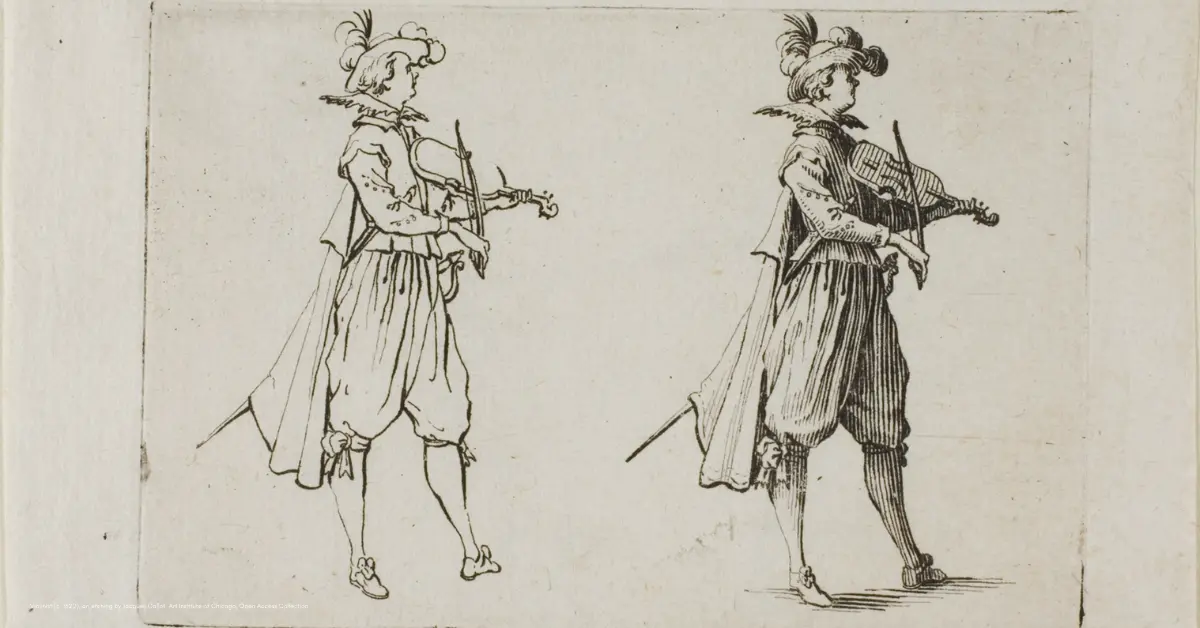
In 2008, an amateur violinist named Karl Phipps brought an instrument to the Royal Academy of Music in London for identification. The violin had been in his family for years, stored in a case in his late father's house. A specialist at the Academy examined it and identified it as a work of Antonio Stradivari, dated to approximately 1696.
The instrument, subsequently named the "Stradivari ex-Phipps," sold at auction shortly afterward for approximately $600,000. Phipps had carried it to London on the Tube.
The story is not unique. Musical instruments are perhaps the collecting category most likely to produce discoveries of this kind, for a structural reason: instruments were made to be played, they were passed between musicians across generations, and the documentation that established their origins was maintained, or not, by the players who owned them rather than by any institutional archive. A Stradivari violin might spend a century circulating among working musicians before anyone thought to ask the Royal Academy who made it.
The musical instrument market divides into segments that operate quite differently from each other: the classical instrument trade dominated by the Italian baroque makers, the separate and enormous market for vintage guitars and amplifiers, and the smaller markets for other historical instruments including keyboard instruments, brass, and woodwind. Each has its own logic, its own specialists, and its own relationship between maker, provenance, and price.
Most collectibles are valued for what they are: objects to be owned, displayed, or stored. Musical instruments are valued for what they do, for properties of sound and playability that determine whether a professional performer would choose to use one. This creates a valuation framework unlike any other collecting category.
A Stradivari violin is worth millions because concert soloists choose to play on them. The instruments produce a sound quality that modern makers have not been able to replicate reliably, despite extensive scientific study of the wood, varnish, and construction techniques. The best Stradivari violins are in near-continuous professional use. They are not objects that sit in cases and are appreciated for their appearance, though their appearance is remarkable. They are professional tools that happen to be three centuries old.
This means that condition in the instrument market is assessed differently from any other collecting category. A Stradivari that has been poorly repaired by an incompetent luthier is worth considerably less than one that has been maintained correctly through professional intervention over its life. What would be considered "original condition" in furniture or ceramics, an object that has never been touched, is not valuable in instruments, because an instrument that has not been played and maintained deteriorates in ways that affect its sound.
The result is a market in which expert understanding of restoration history and luthier intervention is as important as any other variable. A violin sold with a certificate from a respected authentication authority is not finished, a serious buyer will also want to know who has worked on it and what they did.
The dominant force in the high-value classical instrument market is a set of workshops that operated in Cremona, Italy, between roughly 1550 and 1750. The Amati family established the tradition and the fundamental form of the modern violin. Stradivari refined it to a standard that has not been surpassed. The Guarneri family, particularly Giuseppe Guarneri del Gesù, who worked in the first half of the eighteenth century, produced instruments that some players prefer to Stradivari for their power and projection.
These three names account for the majority of value in the high-value classical instrument market. A confirmed Stradivari sells for between one and twenty million dollars, depending on condition, provenance, and playing quality. The Lady Blunt Stradivarius, sold at Tarisio Auctions in 2011 for $15.9 million, remains the highest authenticated price paid at auction for a violin. A confirmed Guarneri del Gesù sells in a comparable range. Instruments attributed to the Amati family sell for somewhat less, though still at levels that put them among the most valuable objects traded.
The scarcity is real and will not change. Stradivari is estimated to have made approximately 1,100 instruments in his lifetime; around 650 violins and 63 cellos are believed to survive. Every known instrument is documented. New Stradivari do not appear on the market frequently, when they do, as with the ex-Phipps, it is because family inheritance moved them through hands that did not know what they held. The total number available to collectors is finite and slowly declining as instruments enter museum collections and foundation ownership.
The authentication of Italian baroque instruments is conducted by a small number of respected authorities whose certificates are essential to any serious transaction. The major figures in this trade include dealers and scholars who have spent decades studying individual makers' construction techniques, varnish formulas, and wood selection. Their certificates, formal written attributions, accompany virtually every significant transaction in the classical instrument market.
The certificate system creates its own hierarchy. A certificate from a widely respected authority adds value directly; an attribution that lacks supporting documentation or that contradicts a previous expert opinion creates uncertainty that suppresses price. In contested cases, the practice of seeking multiple expert opinions, and the existence of conflicting opinions among respected authorities, is understood as a normal part of the market rather than a scandal.
Tarisio, the specialist auction house and dealer that handles the largest volume of high-value classical instruments, maintains a database called COZIO that documents the ownership history, auction results, and expert opinions on record for thousands of instruments. It is the most comprehensive public resource in the category. Serious buyers use it as a starting point for any due diligence, though the database is incomplete and self-reported data carries the caveats of any self-reported system.
The market for vintage electric guitars and amplifiers is as large as the classical instrument market in total volume and operates on almost entirely different principles. The relevant makers here are not the Cremonese workshops of the seventeenth century but the American factories of the 1950s and early 1960s: Gibson, Fender, Gretsch, Rickenbacker. The instruments that command the highest prices are those that coincide in period with the emergence of rock and roll, are associated with specific musicians, or represent production variants that are rare and sonically desirable.
A 1959 Gibson Les Paul Standard in original finish, sunburst, no modifications, is the apex of the vintage guitar market. The 1958–1960 production run of this model is widely considered the best-sounding version of the instrument, and the number of surviving examples in original, unmodified condition is small relative to demand. Prices for original-condition examples in excellent condition regularly exceed $500,000; exceptional examples have sold above $1 million.
The celebrity-owned instrument market intersects with vintage guitar but extends well beyond it. Kurt Cobain's acoustic guitar from the MTV Unplugged performance, a 1959 Martin D-18E, modified, sold at Julien's Auctions in 2020 for $6 million, establishing the record for a guitar at auction. Eric Clapton's "Blackie," a composite Stratocaster assembled from three late-1950s Fender bodies, sold at Christie's in 2004 for $959,000. These prices are driven as much by narrative as by the instruments' intrinsic qualities: they are not necessarily the best-sounding instruments sold in those years. They are the ones most closely associated with a defining moment in cultural history.
Celebrity association is the most powerful price multiplier in the musical instrument market, and it operates on objects that would otherwise be unremarkable. A standard production Fender Stratocaster from 1968 might sell for $10,000 to $30,000 in original condition. The specific 1968 Stratocaster that Jimi Hendrix played at the Monterey Pop Festival, and subsequently set on fire, sold at auction for approximately $750,000. The difference is entirely in the documented association.
The documentation required to establish that association is specific and demanding. A photograph of the artist playing the instrument is the gold standard, ideally one that allows the instrument's specific features to be matched visually to the piece being sold. Supporting documentation might include purchase records, tour manifests, or testimony from band members or road crew. Without this documentation, claimed celebrity association is worthless in the market, and the market knows it. Sellers claiming undocumented celebrity ownership are treated with the same scepticism as sellers claiming undocumented Stradivari attribution.
The specialist auction houses that handle high-value celebrity instruments, Julien's Auctions has historically dominated this segment, devote substantial resources to provenance research before accepting consignment. The standard of documentation they require has tightened as the category has grown and as the financial stakes have increased.
Beyond stringed instruments and vintage guitars, the musical instrument market includes smaller but significant categories. Historical keyboard instruments, harpsichords, fortepianos, and early pianofortes, attract specialist buyers with particular interest in historically informed performance practice. Instruments made by significant makers in these categories, including Broadwood pianos associated with documented historical ownership, can sell for substantial sums.
Historical brass and woodwind instruments occupy a smaller collector market, primarily among players and specialists in early music. Instruments made by documented makers in the seventeenth and eighteenth centuries attract significant interest. The range of prices is wide and the specialist knowledge required is considerable; buyers outside the performance community rarely navigate this market without specialist advice.
Bows, the separate instruments used to play stringed instruments, form their own collecting category with their own maker hierarchy. A bow by François Xavier Tourte, the Stradivari of bow making, can sell for $200,000 or more. The authentication and condition standards are comparable to those for instruments, and the same specialist houses handle both.
The primary specialist auction house for classical instruments is Tarisio, which operates out of London and New York and conducts the most significant dedicated instrument sales in the category. Christie's has historically handled major instrument sales, including its long-running relationship with the Stradivarius Foundation and significant estate dispersals. Sotheby's has held notable instrument auctions including the 2002 sale of the Mendelssohn Stradivarius.
For vintage guitars and celebrity instruments, Julien's Auctions and Heritage Auctions are the primary venues. Both run dedicated music memorabilia sales and maintain specialist expertise in documentation and authentication.
Private sales between specialist dealers account for a significant portion of high-value transactions in both segments. Major dealers, particularly in the classical instrument trade, maintain long-term relationships with buyers and sellers that mean the most significant instruments change hands privately, with public auction serving primarily as a price-setting mechanism and a venue for instruments whose owners have not identified a private buyer.
Estate sales remain a significant source of discovery. The story of the Phipps Stradivari, brought to London from a family home, is the dramatic version of a pattern that plays out regularly at smaller price levels: instruments stored in attics, inherited by families who knew they played, not knowing what they had. The implication for collectors is that the specialist dealer and auction networks, which have the reach to encounter these instruments when they surface, are the appropriate first call for anyone who suspects they may have inherited something significant.
The classical instrument market at the highest level has experienced a structural shift over the past two decades. Several of the world's most significant Stradivari violins are now owned by foundations or government-backed bodies that lend them to soloists rather than sell them. The Nippon Music Foundation holds more than a dozen significant instruments on this basis. This has reduced the number of top-quality instruments that come to public market in any given year, which has the effect of concentrating demand around the instruments that do appear.
The vintage guitar market has continued to appreciate, driven by the same generational dynamic as movie memorabilia: collectors who grew up with the music produced by these instruments now have the resources to own them. The 1958–1960 Les Paul Standard market in particular has seen consistent price appreciation. Condition premiums, the additional value assigned to unmodified, original-finish examples, have widened as the proportion of surviving instruments in original condition has declined.
The celebrity instrument segment is more volatile, as it is tied more directly to cultural fashion. Instruments associated with artists whose cultural standing is highest at the time of sale perform best; the same instruments can sell for different prices in different years depending on their association's current resonance. A Kurt Cobain instrument selling at a moment of renewed cultural focus on Nirvana's legacy is in a different position from the same instrument offered at a quieter moment. Collectors in this segment who are buying for appreciation rather than for personal connection to the music should be aware of this timing dimension.
For collectors considering entry into any segment of the musical instrument market, the priority is specialist engagement before any significant purchase. The knowledge asymmetry between specialist and general market is larger in instruments than in almost any other collecting category. The upside of that asymmetry is that a collector who builds specialist knowledge, or maintains relationships with specialist advisors, can make acquisitions at prices that later buyers, with more limited knowledge, would not find.
About Orpheus Alerts
Orpheus Alerts monitors auctions, private sales, galleries, dealers, and estate collections worldwide to find exactly what collectors are looking for. Tell us what you want, and we'll alert you when it comes to market.
orpheusalerts.com · When you know what you want.
