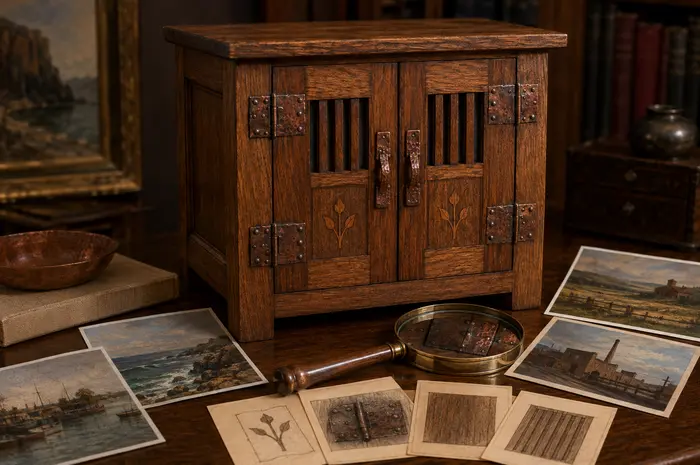
A significant work can appear on a small regional auction calendar with a weak title, two poor photographs, and no searchable artist attribution. By the time it reaches a major database, the lot has closed or competing buyers have already made contact. Knowing how to find hidden art listings is therefore less about searching harder. It is about building an intelligence process that detects emerging signals across a market designed to be fragmented.
For serious collectors, the advantage is rarely a secret source. It is speed, breadth, and the ability to recognize a credible opportunity before it becomes obvious. The best acquisitions are often found where the cataloging is incomplete, the seller is local, and the listing has not yet been amplified by the usual channels.
The art market does not operate from a single inventory system. Major international auction houses receive intense attention, but they represent only one visible layer of supply. Beneath it sits a large and uneven network of regional auctioneers, estate liquidators, independent galleries, consignment shops, antiques specialists, dealer inventories, collector forums, and local online marketplaces.
Many of these sources publish inventory in ways that resist ordinary search. An auction house may list a painting as “unsigned landscape” despite a recognizable school or hand. An estate company may use a family description rather than accepted cataloging language. A sculpture may be entered under a misspelled surname, a former attribution, a material description, or simply “bronze figure.”
That is not always carelessness. Smaller operators may lack a dedicated specialist, work under compressed deadlines, or intentionally use limited detail while they assess consigned property. The result is an information gap. Sophisticated buyers can use that gap, provided they can separate neglected signals from genuinely weak objects.
A productive search begins before you open a browser. Define the acquisition target with enough precision to identify good candidates, while leaving enough flexibility to catch imperfectly described works. “A painting by Artist X” is usually too narrow. A useful search profile accounts for the ways a listing may fail to describe the work correctly.
For each target, establish a compact search architecture that includes:
This structure matters because a hidden listing may not contain the artist’s name at all. A 19th-century American landscape, for example, could be discoverable through location, subject, frame type, or a partially legible signature. A rare modernist ceramic may surface under a model number, glaze description, or the name of a retailer rather than its maker.
The goal is not to create a massive pile of alerts. It is to create a disciplined net that catches meaningful anomalies. Overly broad monitoring produces noise, which slows the review process precisely when time matters.
Most collectors search the title and stop there. Hidden opportunities frequently require a wider read of the listing: image captions, condition reports, PDF catalogs, lot notes, sale terms, shipping information, and the auctioneer’s past-sale archive. A listing’s category can be equally revealing. An unfamiliar name buried in “decorative arts” may deserve more scrutiny than the same object prominently placed in a specialist sale.
Image-led review is essential for categories where textual metadata is thin. Train your eye to notice period-appropriate construction, casting quality, labels, inscriptions, mounts, frames, and surface characteristics. The listing image is evidence, not proof. But it may justify a fast request for additional photographs, provenance material, or a condition report.
The most visible venues are efficient but crowded. If a work is properly attributed, well-photographed, and promoted through a major sale, its value is likely already understood by the market. That does not mean major auctions should be ignored. It means they should not be your only discovery channel.
Regional auction houses are often productive because they handle estates near the point of origin. A consignment may arrive with family provenance, old labels, or an unusual group of related objects that a larger house would have separated. Estate sales can reveal works before formal consignment occurs, though condition, authenticity, and title history may be less certain. Independent galleries and local dealers may have strong material but limited digital marketing, particularly when their clientele has historically been local.
The trade-off is clear: the less visible the source, the more verification falls on the buyer. A low-profile listing can offer genuine value, but it can also reflect incomplete documentation, restoration issues, export restrictions, or a misattribution that the market has already considered. Discovery creates a lead. It does not replace connoisseurship or due diligence.
Poor metadata is one of the most reliable paths to hidden inventory. Search common spelling variants, but also think structurally. Names are often reversed, abbreviated, stripped of accents, or translated. Historical artists may appear under birthplace names, nobiliary titles, family names, or old catalogue raisonné conventions. Decorative arts listings may use trade terminology that differs from museum terminology.
Use category-based phrases alongside proper names. Rather than searching only for a specific maker of Arts and Crafts furniture, monitor terms such as “hammered copper,” “inlaid oak,” “mission cabinet,” or a distinctive hardware description. For paintings, subject matter and geographic language can expose overlooked work: harbor scenes, coastal studies, ranch landscapes, industrial views, or portraits associated with a particular region.
Do not assume that every error signals an opportunity. Some errors are harmless, and some are paired with estimates that already reflect the correct attribution. The useful question is whether the description, imagery, estimate, and venue appear out of alignment. That mismatch is where research should begin.
Finding a listing first has little value if your review process takes two days. Serious buyers should decide in advance what happens when a potential match appears. Assign a priority based on scarcity, quality, condition risk, estimate, and sale timing. For an exceptional work, request documentation immediately and identify the relevant expert or conservator before the sale deadline approaches.
Keep a record of comparable results, known examples, preferred dimensions, condition tolerances, and provenance requirements. This enables a faster initial judgment. It also prevents a common error in competitive buying: confusing novelty with quality because the discovery itself feels exciting.
For auction opportunities, determine the full cost early. Include the buyer’s premium, sales tax where applicable, packing, insurance, shipping, restoration, framing, and any import or export implications. A seemingly modest lot can become expensive quickly. Conversely, a strong object with a flawed title but manageable condition may still present unusual value after those costs are properly modeled.
Directness matters. If the source permits pre-sale questions, ask focused ones: Can they provide a close image of the signature? Is there a label on the reverse? Has the work been examined out of frame? Are there reports of lining, overpaint, cracks, repairs, or losses? Vague questions invite vague answers. Specific questions create a usable record.
Manual monitoring is valuable for expertise, but it does not scale across a fragmented market. New inventory appears at irregular hours, under inconsistent labels, and in formats that ordinary alerts often miss. A disciplined system should continuously scan a wide source universe, recognize variations in naming and categorization, and route only relevant matches for review.
That is the distinction between standard search and collector intelligence. Standard search returns what is already indexed and popular. Intelligence identifies newly published, poorly indexed, and contextually relevant signals before they become widely circulated.
Orpheus Alerts applies proprietary scanning technology to this problem, monitoring fragmented sources for the named artists, collecting categories, periods, styles, and price parameters a subscriber specifies. The value is not another marketplace or a broker in the middle. It is a private stream of opportunities organized around your acquisition mandate.
Automation should narrow the field, not decide what to buy. Attribution, condition, provenance, and personal conviction remain human decisions. The collector with the best process combines broad machine coverage with selective expert review.
The discipline to pass is part of finding well. A hidden listing may be under-described because its attribution is unsupported. It may carry rights, title, authenticity, or condition risks that make a low estimate irrelevant. If a seller cannot provide basic information, if the provenance has unexplained gaps, or if the photographs conflict with the description, slow down.
There are also moments when an attractive discovery is simply outside the collecting mandate. A collector focused on museum-quality examples should not dilute a collection with a marginal work merely because the price appears favorable. Dealers and advisors face a different calculation: inventory turnover, client demand, restoration capacity, and carrying cost may justify a speculative purchase that a private collector should decline.
The right opportunity is not merely hidden. It is appropriate, defensible, and actionable before the broader market has time to correct the information gap. Maintain the watchlist, sharpen the terms, and keep your decision criteria ready. When the right signal appears, hesitation should not be the reason it belongs to someone else.
