Ask someone why a rare object is valuable, and the answer usually arrives in a currency symbol. A first-edition manuscript is worth this much. A scientific instrument sold for that much. The number is real, but it's also the least interesting thing about the object.
Behind almost every significant private collection sits a quieter kind of value that never shows up on an invoice: the preservation of something that would otherwise have been lost, forgotten, or dispersed into obscurity. Collecting, at its best, isn't only acquisition. It's stewardship.
A painting, a scientific instrument, a photograph, or a piece of correspondence is never just an object. It's physical evidence of how an earlier generation lived, worked, thought, and made things. Furniture reveals domestic life. Coins and instruments reveal trade and craft. Photographs document moments no written record captured in the same way.
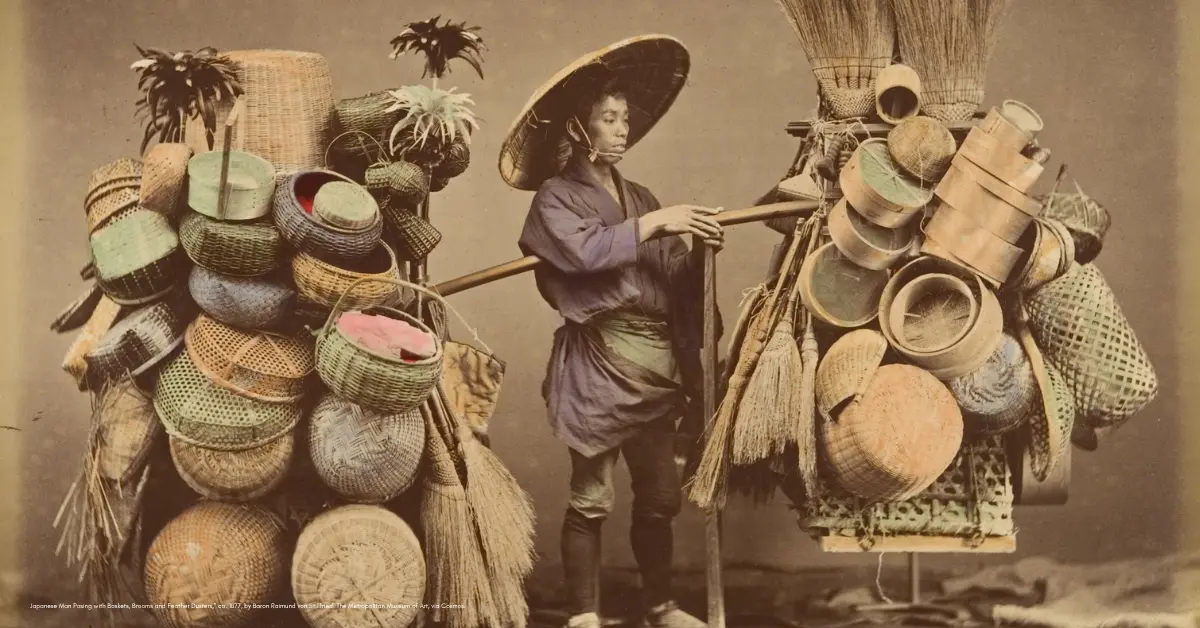
Much of this evidence survives specifically because someone chose to keep it. Institutions can't collect everything, and they rarely arrive first. Private collectors, often working years or decades ahead of institutional interest, are frequently the reason a category of object survived at all. Toys, early photography, and vernacular design were all treated as disposable in their own time; specialist collectors kept them intact long before museums recognized their significance.
Craftsmanship tells a similar story. Many objects represent techniques, materials, and skills that have since disappeared or become rare. A hand-built scientific instrument or an early piece of furniture isn't just a functional object. It's a record of a manufacturing method that, once lost, is nearly impossible to fully recover. Keeping the object keeps the knowledge legible.
A single rare object is a curiosity. A body of related objects, assembled with care over years, becomes something closer to an archive. Serious private collections routinely become resources that researchers, authors, and institutions draw on directly, sometimes providing the only surviving material evidence for a given period, maker, or movement.
This is where responsible collecting diverges most clearly from simple acquisition. A collector who documents provenance, condition, and acquisition history isn't just protecting resale value. They're preserving a chain of custody and context that would otherwise be lost the moment an object changes hands informally. Ownership histories, once broken, are difficult or impossible to reconstruct. A collector who keeps that record intact is doing quiet, unglamorous work that later scholarship depends on.
Many of the world's most significant museum holdings didn't start as museum acquisitions. They started as private collections, assembled over a lifetime and later donated, loaned, or bequeathed to an institution willing to house and interpret them for the public. The private collector, in these cases, functions as an early-stage custodian: someone willing to take on a category of object before an institution had the interest, budget, or awareness to do so.
This pipeline, from private passion to public collection, depends entirely on collectors who treat the objects as worth preserving properly, not simply worth owning. An object acquired carelessly, without documentation or context, is a much weaker candidate for eventual institutional life than one a collector has actively researched and cared for.
Serious collectors tend to become genuine specialists in their category, often knowing more about a narrow area than any single institution can. They learn to recognize authentic pieces, unusual variations, and telltale signs of restoration or forgery. That expertise doesn't stay theoretical. Collectors are frequently the people institutions call on to help identify, authenticate, or contextualize objects that arrive with incomplete records.
This is easy to overlook because it doesn't look like scholarship in the traditional sense. It rarely produces a published paper. But it's real expertise, built through years of close attention to material that few other people have studied as closely, and it keeps knowledge alive that would otherwise sit dormant in institutional archives no one has the specific background to interpret.
The cultural-preservation case for collecting isn't equally strong everywhere. It matters most for categories where objects are genuinely at risk of being lost, misattributed, or dispersed without record: antiquities, rare books and manuscripts, historical photography, scientific instruments, fine art, musical instruments, and objects with strong ties to a specific historical moment.
For these categories, a collector isn't simply choosing what to own. They're often deciding what survives intact, documented, and legible to whoever encounters it next, whether that's a future buyer, a researcher, or eventually a museum visitor standing in front of a gallery label.
None of this requires reframing collecting as a purely noble pursuit. People collect for many reasons, and enjoying an object is reason enough on its own. But it's worth recognizing that the act of finding, documenting, and holding onto something rare carries weight beyond the transaction. Discovery and stewardship are part of what collecting actually is, even when the person doing it is simply pursuing what they love.
The objects worth finding are rarely the ones sitting in plain view. They're in private hands, unpublished inventories, and quiet corners of a market that rewards patience and specialist knowledge over speed. Finding them well, and caring for them once found, is its own kind of contribution.
About Orpheus
Orpheus Alerts helps collectors discover specific, rare, and hard-to-find objects across the categories they care about most, connecting the search for a piece with the broader work of preservation and stewardship that serious collecting represents. Orpheus Alerts — When you know what you want.
