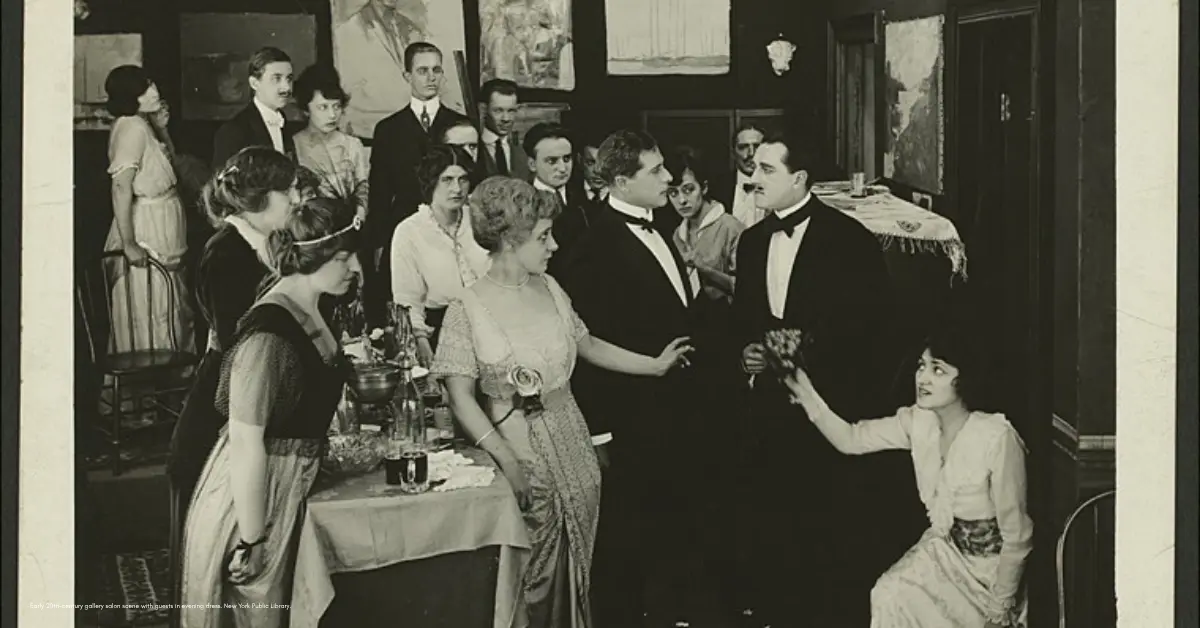
The paddle-raising, the rapid-fire bidding, the gavel coming down, most people's mental image of an auction comes from film and television, and almost none of it resembles what actually happens when a first-time bidder shows up to buy something for real. The tension isn't theatrical. It's procedural, and the procedures are exactly the part nobody explains in advance.
The hammer price, the number called out when the gavel falls, is not what a buyer actually pays. Auction houses add a buyer's premium on top, typically ranging from roughly 20% to 27% depending on the house and the price tier, sometimes on a sliding scale where the percentage decreases at higher price bands. A piece that hammers at $10,000 might mean a final invoice closer to $12,500 once the premium, and often applicable taxes, are added.
First-time bidders who calculate their maximum bid based on hammer price alone routinely discover this the hard way, either by winning a lot they can't comfortably afford or by bidding more cautiously than necessary out of uncertainty about the real total. The fix is simple: always calculate a maximum all-in budget first, then work backward to figure out what hammer price that budget actually allows.
Every catalogued lot carries a pre-sale estimate, a low and high figure the auction house's specialists believe the piece will likely sell for. New bidders often treat this as an authoritative prediction. It's better understood as an informed opening reference point, sometimes deliberately set low to generate bidding interest, sometimes reflecting genuine uncertainty about a piece with limited comparable sales.
Results routinely land well outside the estimate range in both directions. A piece can sell for a fraction of its low estimate if interest fails to materialize, or many multiples above its high estimate if two or more bidders decide they want it badly enough. Estimates are useful for calibration, not for confidence.
Auction house catalogue descriptions are typically brief and can understate real condition issues, not out of dishonesty, but because a formal condition report is treated as a separate, on-request document rather than default reading material. Most specialists will provide one, often including additional photographs, if a prospective bidder simply asks before the sale.
Skipping this step is one of the most common and most avoidable mistakes a first-time bidder makes. A condition report can reveal restoration, repairs, or damage that materially affects value and that a catalogue photo, especially a professionally lit one, may not make obvious at all.
Bidding requires registering with the auction house in advance, typically involving identification and, for higher-value lots, a financial reference or deposit. This isn't a formality that can be handled in the ten minutes before a sale starts. Major auction houses often require registration completed a day or more ahead of time, particularly for first-time bidders or high-value sales, and arriving unregistered on sale day can mean missing the lot entirely.
Bidding in person, by phone, and online through an auction house's own platform are all typically available, each with its own registration process. Absentee bids, a maximum bid left with the auction house in advance to be executed on the bidder's behalf, are worth understanding as an option; the auction house bids only as much as necessary to win, up to that ceiling, not the full amount automatically.
Winning a lot isn't the final step. Payment is typically due within a short window, often 7 days, and buyers are responsible for arranging shipping, insurance during transit, and any applicable import duties or taxes for cross-border purchases, none of which the auction house handles automatically or absorbs into the sale price. For a first-time buyer purchasing something fragile or valuable enough to need specialized handling, these logistics can add meaningful cost and require advance planning that's easy to underestimate.
Attending a preview, the public viewing period before a sale, in person, is worth the effort even for a single lot of interest. Seeing an object directly, asking a specialist questions face to face, and requesting a condition report all happen most naturally during a preview, and skipping it in favor of catalogue photos alone removes most of the due diligence a first-time bidder actually has easy access to.
Setting a firm all-in maximum before the sale starts, and treating it as genuinely non-negotiable once bidding begins, remains the single most useful discipline for a first-time bidder. Auction rooms, whether physical or online, are specifically designed to create urgency, and that urgency is precisely what erodes careful pre-sale planning if a firm limit isn't already fixed in mind before the first bid is placed.
About Orpheus
Orpheus Alerts helps collectors discover specific, rare, and hard-to-find objects before they reach the auction block, whether it's a first sale or a fiftieth. Orpheus Alerts — When you know what you want.
